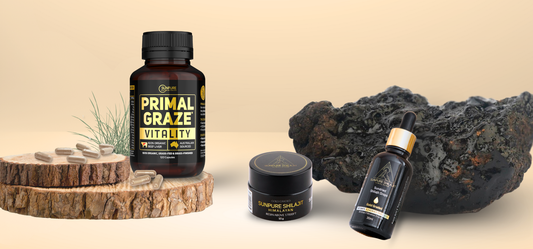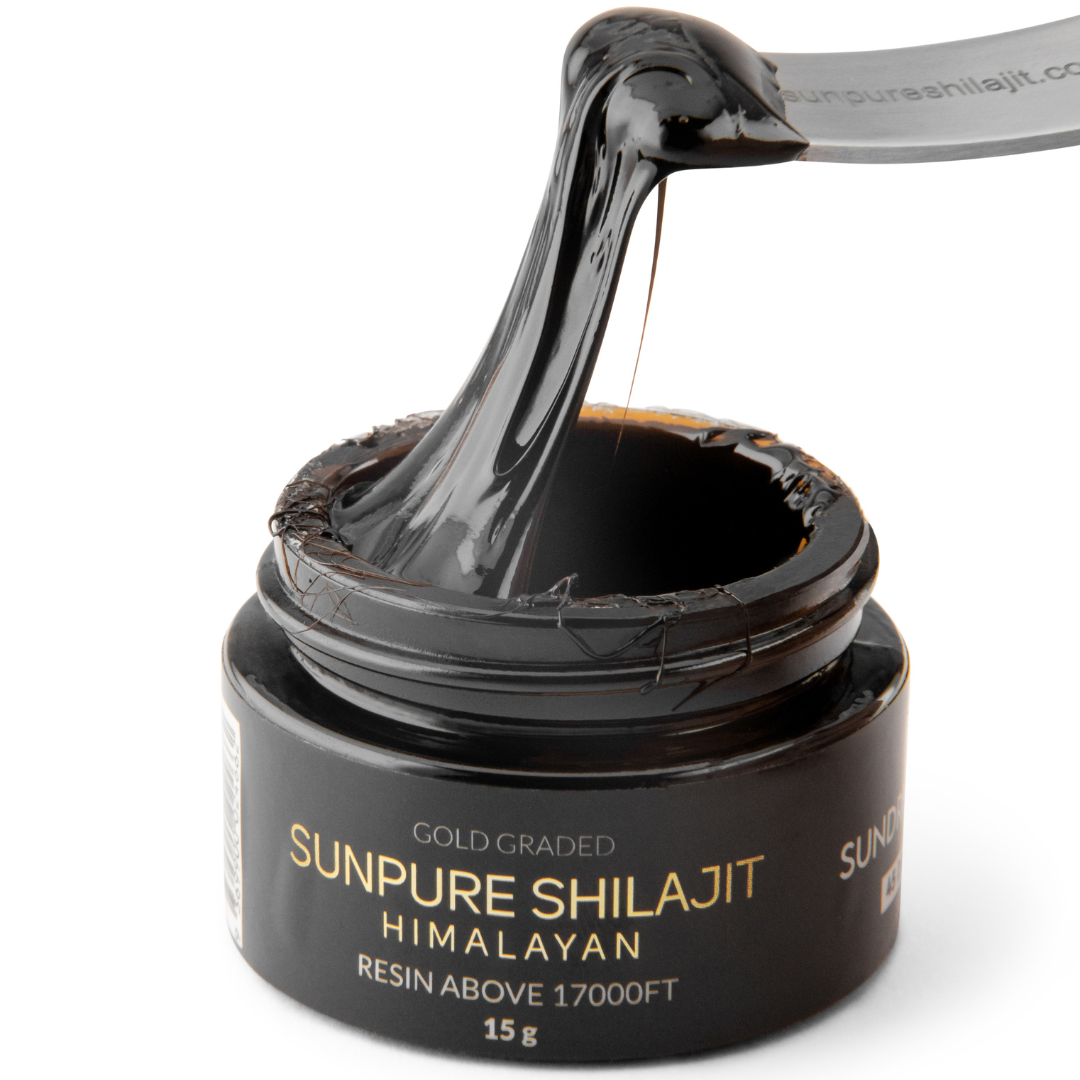


So what is shilajit? If you have seen a jar of sticky black resin online and wondered what on earth it is and why people spoon it into warm water every morning, you are in the right place. Shilajit is a natural mineral-rich substance that has been used for thousands of years, yet most of us only met it recently. Let us walk through what it actually is, what it does, how to take it, and whether it earns a place in your routine.
What is shilajit?
Shilajit is a sticky, tar-like substance that ranges from deep brown to glossy black and oozes out of cracks in high-altitude rock. It forms slowly over centuries as plant and microbial matter is compressed inside the mountains, then softens and seeps out in the warmer months. People scrape it, purify it, and use it as a mineral-rich tonic.
In simple terms, it is concentrated mountain plant matter that nature has been brewing for a very long time. Traditional systems treasured it as a rejuvenator, and that reputation is what carried it from remote ranges to the jar on your shelf. If the backstory interests you, we wrote more about how shilajit was first discovered.
Where does shilajit come from, and how is it made?
Shilajit is not made in a factory. It is gathered from the mountains. The most famous source is the Himalaya, including the high passes around Skardu, but it also appears in the Siberian Altai and the Caucasus. The common thread is altitude, old rock, and a long, slow natural process.
Here is roughly how it comes to be. Over many centuries, layers of plant and microbial material get trapped and pressed inside rock at altitude. Heat, pressure and time break that material down into a dense, mineral-loaded exudate. When the mountain warms through summer, the resin softens and weeps out of the crevices, where it can be collected by hand.
Raw shilajit straight off the rock is not ready to use. It carries soil, plant debris and sometimes things you would not want to swallow, so it has to be purified. At Sunpure our Himalayan resin is sourced high in the mountains around Skardu, then put through a long filtration of around thirty days and traditionally sun-dried for roughly forty-five days. That patience is what turns raw rock exudate into clean, usable resin.
One detail that gets glossed over is how the resin is dried, and it changes the quality more than almost anything else. Shilajit is full of delicate compounds, and heat damages them. A lot of cheap shilajit is fire-dried, cooked quickly over heat and sometimes literally on a stove, because it is fast and cheap. That speed is the whole problem, because the heat destroys some of the fulvic acid and active compounds that make shilajit worth taking. Good resin is sun-dried slowly instead, over many weeks. Ours is sun-dried for around 45 days, low and patient, so the good stuff stays intact. If a brand will not tell you how their shilajit is dried, that is a fair thing to ask, and often a sign it was fire-dried.
"Ordering was very easy, shipping very fast, and I even received a cute handwritten letter from whoever owns this business, which I thought was thoughtful. The product is definitely the sundried 17,000 ft elevation shilajit, which is what everyone is hunting for."

What is shilajit made of?
The two components people talk about most are fulvic acid and humic acid. Alongside those sit dibenzo-alpha-pyrones and a wide range of trace minerals, including magnesium, potassium, iron, calcium, zinc, manganese and selenium. You will often see shilajit described as containing eighty or more minerals, which is a big part of its appeal as a single-source tonic.
Fulvic acid is usually treated as the star. It is widely credited with helping the body actually take up and use the minerals it is carried with, which is why it gets so much attention. If you want the deeper version, we cover why fulvic acid is considered the active ingredient in its own article.
One honest note on numbers. The fulvic content of shilajit varies a lot depending on the source and the lab method used. Native analyses of raw exudate often land somewhere in the mid-teens to twenty per cent. Purification is what changes that picture, because filtering away the rock, soil and inert material concentrates what is left, so a properly purified resin can test a good deal higher than the raw figure. That is why our own resin tests at around 70 to 78 per cent fulvic on our lab reports. There is no single universal number for all shilajit, so be wary of any brand quoting one as if it were a law of nature, and we treat our figure as our tested result rather than a claim about every product on the shelf.
What is shilajit good for?
Most people take shilajit for everyday vitality. The benefits of shilajit that people talk about most are steady energy, support through busy or physically demanding stretches, easier recovery after exertion, and a general sense of feeling resourced rather than running on empty. In traditional Ayurveda it sits in the rasayana category, the rejuvenating tonics meant to restore and sustain over time.
So what does shilajit actually do inside the body? The honest answer is that the picture is still forming. Modern research is mostly made up of small studies and laboratory work, much of it pointing to antioxidant and anti-fatigue or adaptogen-style activity, a lot of which is credited back to fulvic acid. That is genuinely promising, but large, strong human trials are still thin on the ground. So we talk about shilajit as a traditional tonic with encouraging early science, not a cure for anything.
You will see bold claims online about it fixing specific conditions or dramatically changing hormones. We do not make those claims, and you should be cautious of anyone who does. If you want the fuller breakdown, our guide to the benefits of pure Himalayan shilajit resin goes through the realistic upsides. There is also a long tradition of using it as a kidney tonic in traditional Chinese medicine, which is a nice example of how different systems have valued it.
What forms does shilajit come in?
Shilajit comes in a few forms, and what really matters is not the format but whether it is real, pure shilajit. Resin is the traditional whole form. Powder and capsules are simply that same resin dried right out with the moisture removed, so a pure powder is every bit as potent, sometimes more so gram for gram. Drops and gummies make it easy to take day to day. The quality difference comes down to how it is made, not the form. A real, well-prepared capsule or powder is excellent, and the only things that drag quality down are fillers or fire-drying.
| Form | What it is | Who it suits |
|---|---|---|
| Shilajit resin | The most prized and authentic traditional way to take shilajit | 🏔️ Traditionalists and naturalists who want the real, whole, most potent form and do not mind the earthy taste |
| Shilajit powder | Resin dried right out and ground, just as potent when it is pure, though cheap versions slip in fillers or other herbs | 🥄 Mixing into drinks, as long as you trust it is pure and not bulked with fillers |
| Shilajit capsules | Pure dried shilajit, resin with the moisture removed, in easy-to-swallow capsules | 🎒 Anyone who wants no taste and no fuss, easy at home or thrown in a bag |
| Shilajit drops | A liquid shilajit preparation | ✈️ Travellers and anyone who wants quick, precise dosing on the go |
| Shilajit gummies | Real sundried shilajit resin made into a honey-sweetened gummy, a tasty treat | 💪 Active and gym-goers and travellers who want the easiest, tastiest option |
The pattern worth noticing is simple: the form barely matters, the purity does. A real resin, a real powder and a real capsule are all genuine shilajit, just as potent for what they are. What actually changes things is whether a product has been kept pure or padded out, because fillers and added sugars are easiest to hide in the darker, sweeter formats. So pick the format you will genuinely take every day, and judge it on purity, not on form.
We make four of these, resin, capsules, drops and gummies, and each links to ours in the table above. We do not sell loose powder on its own, but that is no knock on powder, our capsules are pure dried shilajit, fantastic and easy to take. Whichever form suits you, the only thing that truly matters is that it is genuine, pure shilajit, so you can choose by taste and lifestyle without trading off quality. If you want to see how the forms stack up, we go deeper in our guide to the different shilajit forms.
What separates a clean shilajit from a cheap one
Here is where the brand you choose really matters. Two jars can look identical and be worlds apart once you read what is actually inside. A lot of cheap shilajit is padded out to cut costs, and because the stuff is dark and sticky, fillers are easy to hide. This is what tends to separate a clean shilajit from a low-grade one.
| Product comparison |  |
⚠ A cheap or low-grade one |
|---|---|---|
 Shilajit resin Shilajit resin |
Purified resin and nothing else | Watered down or bulked out with molasses or ozokerite, a mineral wax |
 Shilajit drops Shilajit drops |
Pure sundried resin in an easy dropper form, no cheap fillers | Heavily watered down to stretch it, with very little real resin left |
 Shilajit capsules Shilajit capsules |
Just shilajit powder in a plant-based capsule, no fillers | Padded with fillers and flow agents, often low in real shilajit |
 Shilajit gummies Shilajit gummies |
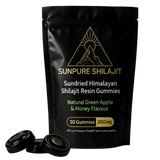
Made with real sundried Himalayan shilajit resin, 200mg per gummy, sweetened with raw honey | Usually cheap shilajit powder or a trace of extract, padded with maltodextrin, refined sugar and synthetic flavour |
| Drying | Slowly sun-dried, which protects the fulvic acid and minerals | Often fire-dried or heat-rushed, which can degrade the active compounds |
| Purity proof | Independently lab tested, with a certificate of analysis | No testing you can actually see |
| What you get | Fulvic acid and a full mineral spread | Diluted, and you cannot be sure what is in it |
Cheap shilajit is usually cheap for a reason. Fire-drying and fillers are the fast, low-cost shortcuts, and they are exactly what strip the quality out, so a bargain jar is rarely the bargain it looks like. That is the whole reason we slow sun-dry our resin, put it through a long purification and independent testing, and keep our shilajit range free of the fillers and sugars that pad out the cheap stuff.
How do you take shilajit?
The classic method is simple. Take a pea-sized amount of resin, roughly 250 to 500mg, once a day. If you are new to it, it is sensible to start smaller, around 100 to 150mg, and build up as your body gets used to it. Stir it into a cup of warm water or milk, never boiling, until it has fully dissolved, then drink it down. Water that is too hot can knock the goodness about, so keep it just warm enough to melt the resin.
Because shilajit has a warming nature, it tends to suit cooler months and people who run cold. If you naturally run hot, or you are in the middle of a heatwave, ease off the amount or save it for the cooler part of the year. As with most tonics, consistency matters more than intensity, so give it a fair run of around two to four weeks before you judge it.
If you would rather start with the traditional, whole form, our Himalayan Sundried Shilajit Resin is the purified, sun-dried resin we make for exactly this kind of daily routine.
A few other ways people use shilajit
Shilajit is not only for drinking. A handful of traditional and practical uses come up again and again, and the same rule covers all of them: only ever use clean, purified, tested resin.
- On the skin. Some people mix a little resin or a few drops into water for an occasional face or skin application, an old traditional practice. We go into it in our piece on shilajit for skin.
- In the garden. Shilajit is rich in fulvic acid, which gardeners use as a natural plant tonic, so a tiny amount heavily diluted in water can go to your plants.
- For pets. Some owners give animals a very small amount, but pets are not little humans, so check with your vet before you try it.
Is shilajit safe, and who should avoid it?
Here is the part that matters most, so we will be direct. For most healthy adults, properly purified shilajit is considered safe to take. The real risk does not come from shilajit itself, it comes from raw or poorly processed shilajit.
Unpurified resin scraped straight from the rock can carry heavy metals such as lead, arsenic, mercury and cadmium, along with mould or cheap fillers in dishonest products. This is the whole game. Purified resin that has been independently lab tested for purity, with a certificate of analysis behind it, is what separates a safe daily tonic from something you should not put in your body. Our resin is third-party tested and screened for things like those heavy metals and microbial contamination, so we know what is in the jar before it reaches you.
A few people should be more careful or skip it. If you are pregnant or breastfeeding, on medication, or managing a health condition, check with your doctor first. Because shilajit naturally contains iron, anyone with high iron levels or haemochromatosis should be cautious. We go through this properly in our article on shilajit side effects and who should avoid it.
Does shilajit actually work, and is it worth taking?
For most people the answer is yes, as long as you keep your expectations realistic. Shilajit is not a magic fix and it will not transform you overnight. What it offers is a traditional, mineral-rich daily tonic with a very long history of use and some encouraging early science, mostly around energy levels, recovery and a general sense of vitality.
If you are looking for a single dramatic result from one product, you will probably be disappointed by any supplement, shilajit included. If you are after a steady, foundational addition to a healthy routine, taken consistently and from a source you can trust, it has earned its reputation for good reason. The catch is that it is only worth it if it is pure, which loops back to choosing properly purified, lab-tested resin rather than the cheapest jar you can find.
"I know it is about 4 times the price of the cheaper products of lower quality (I had bought a cheap one in the past) but it is completely and utterly worth it. I could notice a significant increase going from the cheaper product to this."
Frequently asked questions
What does shilajit do to your body?
Shilajit delivers fulvic and humic acids along with a broad spread of trace minerals, and people most often notice support for daily energy, recovery and overall vitality. Much of the early research points to antioxidant and anti-fatigue activity, though strong human trials are still building, so it is best thought of as a supportive daily tonic rather than a treatment.
What does shilajit taste like?
Earthy, bitter and a little smoky, which is normal for a natural mineral resin. Dissolving a pea-sized amount in warm water or milk softens the flavour, and some people add a touch of honey. If the taste really is not for you, capsules or drops are gentler options.
What happens if you take shilajit every day?
Daily use is the traditional way to take it, since tonics like this are about consistency over time rather than one big dose. Stick to a sensible amount, around a pea-sized piece of resin, and give it two to four weeks. Remember it is warming by nature, so you may want to ease off in hot weather or if you run hot.
Who should avoid taking shilajit?
If you are pregnant or breastfeeding, taking medication, or managing a health condition, talk to your doctor before starting. Because shilajit contains iron, anyone with high iron or haemochromatosis should be cautious. And everyone should avoid raw, unpurified shilajit and stick to purified, lab-tested resin.
How do you tell real shilajit from fake?
Home tests only get you so far, and most of them are easy to fake. The one thing that genuinely tells you what you are buying is the paperwork behind it, so look for a brand that purifies its resin properly and is willing to show an independent purity report, with a certificate of analysis you can actually read, rather than just promising it is pure. If a seller cannot point you to that testing, treat the product with caution.
Is shilajit legal in Australia?
Yes. Shilajit is a legal food and supplement in Australia and can be bought and taken freely. As with any supplement, the thing to focus on is quality and purity, so buy purified, independently tested resin from a source you trust.